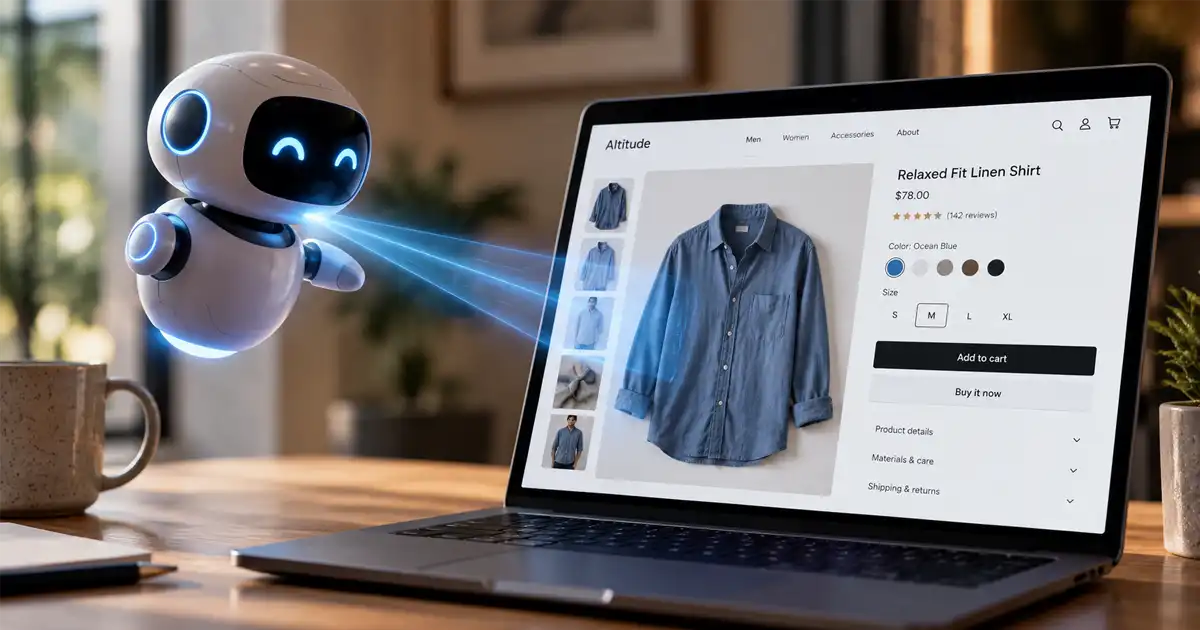
The Black Friday numbers are in, and the AI part finally comes with a revenue figure. Adobe Analytics counted $13.1 billion in U.S. online sales on Black Friday. That's up 11.1% from 2025 and above Adobe's own forecast of about $12.9 billion. Gaming and electronics led the day, and plenty of shoppers also used the deals to stock up on basics like cleaning supplies, pet care and personal hygiene items.
AI Traffic Doubled on Black Friday, and It Spent
The number to circle is AI traffic. On Black Friday, traffic from AI tools to U.S. retail sites rose 100%. Those visitors browsed 84% longer, and AI traffic brought in 126% more revenue per visit than non-AI traffic, according to Adobe's Black Friday figures, reported by Forbes. Last Black Friday, that gap was 74%.
Read that 126% carefully. It compares AI visitors with everyone else on the same day. It doesn't mean revenue per visit grew 126% from last year. It's still a big number, just a different one from what a quick skim might suggest.
Thanksgiving set things up. Online sales hit a record $7.1 billion, up 10.4%, and AI traffic rose 162% over Thanksgiving 2025, a bit above the 159% Adobe had forecast.
Last season's AI story was mostly about traffic growth: big percentages on a small base, and no clear proof the visits paid off. This year, Adobe's numbers tie AI referrals to money. AI shopping has gone from a curiosity to a line on the revenue report.
Pay attention to definitions before you compare these numbers with your own dashboard. Under how Adobe defines AI traffic, a visit counts when a shopper clicks a link in an AI chat service or AI browser and lands on a retail site. If your analytics put those visits under "direct" or "referral," your AI numbers will look smaller than they are.
Online Kept Growing While Store Visits Fell
Stores had a quieter day. PassBy, a geospatial analytics firm, told Reuters that U.S. store foot traffic fell 2.2% from last year to nearly 930 million Black Friday visits. Online spending, meanwhile, grew 11%.
Discounts did most of the work. Retailers pushed deals on apparel, electronics, appliances and toys to win over shoppers dealing with inflation and high gas prices. Shoppers also used AI tools to compare prices and get more out of tight budgets.
Adobe expects Cyber Monday to reach $15.1 billion, up 6.2%, which would keep it the biggest online shopping day of the year. Across the five days from Thanksgiving through Cyber Monday, Adobe expects $47.5 billion, up 7.4%. For the bigger picture, see Adobe's holiday spending data from earlier in the week.
Black Friday hasn't died. It changed its address.
AI Shoppers Arrive Further Along
The conversion numbers explain the revenue gap. Adobe found that traffic from chatbots and AI-enabled browsers turned into purchases 68% more often than it did a year earlier. On Thanksgiving, shoppers who came from AI were 72% more likely to add products to their carts, browsed 105% longer, and AI traffic produced 74% more visits that ended in a purchase.
In plain terms, the assistant did the comparison shopping before the click. By the time the shopper lands on your page, they've usually picked a shortlist and often a favorite. Your page doesn't need to win them over from zero. It needs to confirm they made the right choice, and then get out of the way.
Salesforce's early holiday results point the same way. By the end of Thanksgiving, Salesforce estimated AI had influenced 23% of holiday orders so far this season. Shoppers connected to AI spent 43% more than other customers, and AI referral traffic grew 75% year over year on the sites Salesforce tracks. ChatGPT was the top AI channel in the U.S. by its count.
Salesforce's Cyber Week forecast is bigger. (It's a projection, so expect final numbers to differ.) Salesforce expects AI and agents to influence $75.8 billion of global online sales, about 21%, up from $67 billion in 2025. It also says shoppers who use a brand's own shopping agent spend 8% more per order and buy 23% more items. This lines up with what Prime Day showed about how AI shoppers behave.
One limit: agents mostly aren't checking out on their own yet. Salesforce found that 74% of consumers trust AI recommendations, but 73% aren't ready to give a personal agent their credit card details. For now, AI is the trusted advisor, and the shopper still clicks Buy.
Five Things to Fix Before the Season Ends
- Fix your product data first. Assistants use complete specs, accurate prices, delivery promises and return policies to decide what to recommend. If a detail is missing, the assistant may skip your product and recommend one with complete information. Our post on AI content optimization for ecommerce covers what assistants look for, and Amazon listing optimization is where we do that work for Amazon catalogs.
- Build landing pages for shoppers who've already decided. Show price, variant, stock status and shipping date right away. Someone ready to buy shouldn't have to scroll past a 90-second brand film to find the size selector.
- Track AI referrals as their own channel. Set up AI referrers as a separate channel in your analytics so you can see their conversion rate and revenue per visit. Otherwise your best-converting traffic gets mixed into "direct" and you can't see it.
- Remember Amazon has its own version. Alexa for Shopping already shapes what shoppers find on Amazon, and our research found Alexa for Shopping ignores search rank 64% of the time. Our guide to optimizing your listings for Alexa for Shopping covers the basics.
- Keep prices consistent across channels. Price comparison is the most common thing shoppers use agents for, so a price that differs between channels gets spotted fast. Amazon's assistant now shows shoppers a full year of price history, so that "deal" price had better be a real deal.
What to Watch Through Cyber Monday and December
First, see whether AI traffic growth keeps slowing as the base gets bigger. Thanksgiving was up 162% and Black Friday was up 100%. Adobe expects about 130% for the full season, so slower growth looks likely. That's normal as a channel matures, and it says nothing bad about how well the traffic converts.
Second, watch whether Adobe's Cyber Monday data shows the same revenue-per-visit gap. If AI visitors keep beating other traffic by a wide margin on the biggest online day of the year, it's hard to justify treating AI referrals as a side project in 2027 planning.
Planning a product launch, a brand build or a catalog cleanup for next year? Tell Parker-Lambert where your brand stands and what you want to do next, and we'll put together a custom quote.