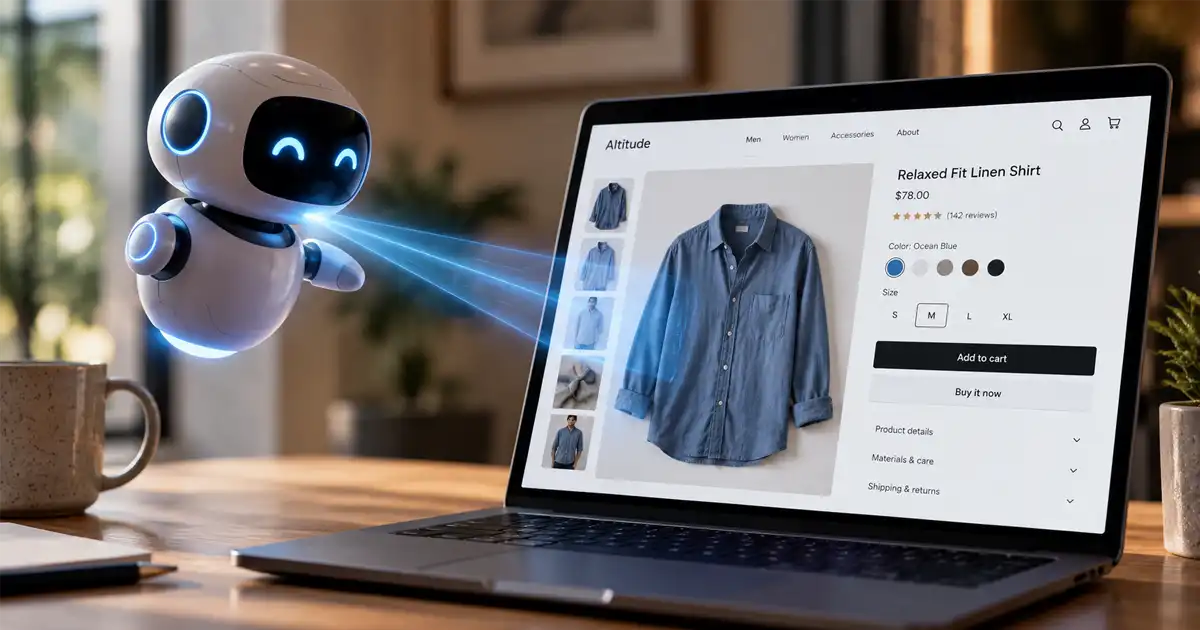
Meta’s AI assistant Muse has passed 10 million setups in the U.S. and Canada, and shopping is one of its leading uses. That’s a useful early signal for brands: some consumers are trying AI-assisted shopping, and products need to be easy for assistants to understand. It isn’t proof that the public has moved wholesale to shopping through AI.
Meta shared the figures during its third-quarter earnings call on October 21. The number gives brands a reason to check their product information and purchase experience, not a reason to throw out the current plan and build a strategy around one assistant.
What Meta’s numbers tell us, and what they don’t
Meta said more than 10 million people in the U.S. and Canada had set up accounts for Muse. CEO Mark Zuckerberg also said about 25% of people who set it up use it on any given day. For shopping, he reported that more than a quarter of Muse’s engaged users who shopped through the assistant had an average purchase size above $200. TechCrunch’s report on Meta’s Muse figures covers the announcement and its context.
Those figures sound sizeable, especially the reported purchase amount. But they need a careful read. Setups aren’t the same as monthly active shoppers, and an average purchase size doesn’t tell us how many transactions took place, how often shoppers bought, or what products they chose. Meta hasn’t published enough detail here to answer all of those questions.
The daily-use figure adds context about engagement, but it still doesn’t establish how many users are shopping in a typical week or month. Nor does 10 million setups tell you how quickly Muse may grow beyond its initial markets. The numbers are company-shared data from an early period, not an independent measure of broad adoption or a forecast of sales for your brand.
The practical takeaway is more modest, and more useful: AI-assisted shopping is getting real-world use, and shopping appears to be a prominent activity among Muse’s early users. That’s worth monitoring. It doesn’t tell you to treat Muse as a major sales channel tomorrow.
Make your product easier for an assistant to understand
An assistant can only make sense of the information it can find. Start by making your listings plain and specific. Say what the product does, who it’s for, and what distinguishes it from close alternatives. A vague title or a description full of broad claims gives shoppers little to compare, and gives an assistant fewer concrete details to work with.
Check that essential facts match wherever a customer might encounter them: marketplace listings, your brand site, and other product pages. That includes size, materials, compatibility, what’s included in the box, care instructions, and important limitations. If one page says a part fits one model and another page names a different model, you’ve given an assistant a small mystery to solve. Shoppers don’t need more mysteries.
Put useful details where people can find them. Don’t bury compatibility in an image, leave out measurements, or rely on a product name to explain what comes in the package. Use clear labels and complete fields. For products with several options, make each variation easy to distinguish by size, color, quantity, or intended use.
This is good product content whether or not an assistant is involved. The work makes it easier for a shopper to assess fit and reduces the chances of an important detail getting lost in a summary. Accurate facts are preparation, not a guarantee that any AI assistant will select, mention, or recommend your product.
A recommendation still has to convert
Being named by an assistant doesn’t finish the sale. A shopper may still compare price, reviews, product details, and retailer trust before deciding. If the listing is unclear, the price looks out of step, or the reviews leave obvious concerns unanswered, the recommendation may earn a look without earning an order.
That pattern applies to AI discovery beyond Muse, too. In our earlier look at what shoppers do after an AI recommendation, we covered how consumers keep checking the basics before they buy. The assistant can introduce a product. The listing, offer, and retailer still have to make the case.
So review both sides of the process. Make sure your product information is complete and easy to verify, then check whether pricing is competitive, reviews are current and helpful, and the buying experience works after the click. AI visibility and conversion are connected, but they aren’t the same job.
What to do now
Pick a set of priority products and audit their key facts across your main sales channels. Look for missing details, conflicting claims, unclear variations, and answers to common customer questions that are hard to find. If you spot a mismatch, correct the source information and check the other pages that repeat it.
Then keep an eye on the referral and conversion data your channels make available. Look for changes in traffic sources, product-page visits, and purchases. Don’t treat a small change as proof that Muse caused it, and don’t turn Meta’s early activity figures into a sales forecast for your brand. One announced metric is a reason to pay attention, not a crystal ball with an app icon.
Good product data helps shoppers make decisions across search, marketplaces, and assistants. That makes it a worthwhile investment even while the exact scale of AI-assisted shopping is still taking shape.
Tell Parker-Lambert about your brand and ask about a custom quote for your project.